What determines the cost of a website
Website cost is mostly a function of effort: how many page types, how custom the design is, how many languages, and which integrations. Two quotes with the same name can describe very different projects. Compare scope first, then price.
Why does website cost vary so much?
Website cost varies because the word "website" covers very different jobs. A five-page company site and a catalogue with hundreds of products connected to accounting software share a name, not a workload.
Quotes also cover different things. One includes copywriting, image editing and a year of maintenance. Another covers code only. Put side by side, the cheaper one looks better until the missing items are billed later.
We do not publish price figures here. We explain how each factor moves the price, so you can read the quotes you receive with confidence.
Which factors drive the price?
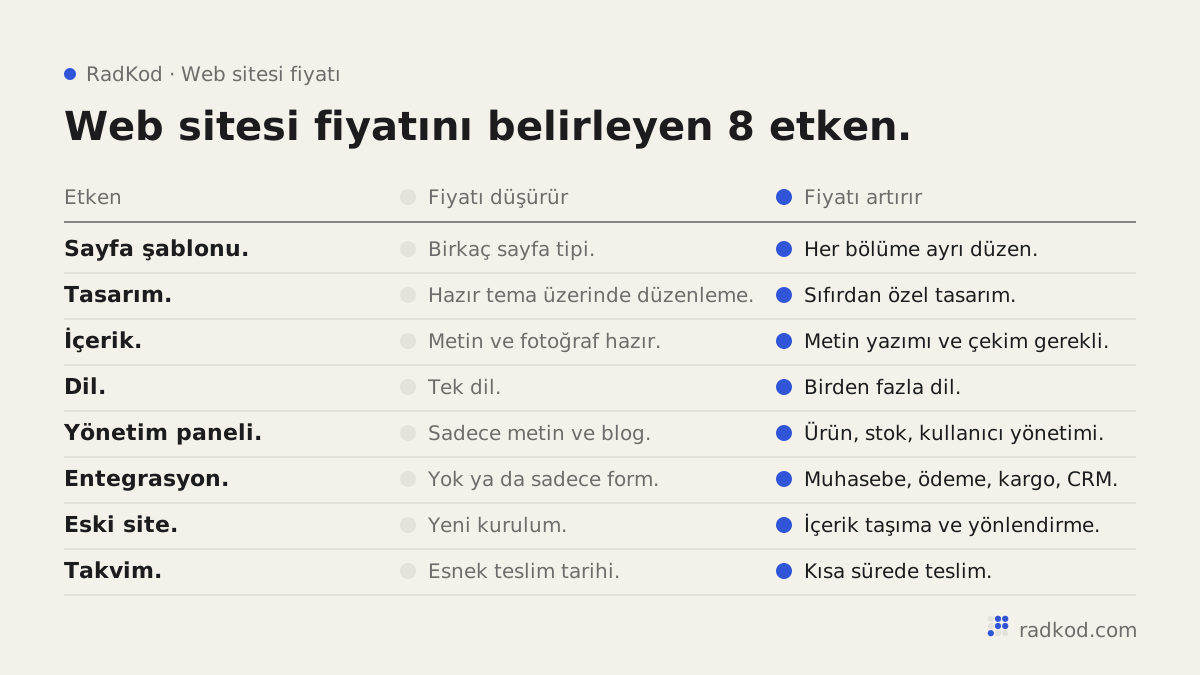
The main drivers are the number of page templates, how custom the design is, content, languages, the admin panel and integrations.
- Page templates, not page count: ten service pages that share one layout are designed once. Ten different layouts are ten pieces of work.
- Design: adapting a ready-made theme is cheaper at the start. A custom design carries your brand better and avoids unused code.
- Content: if text and photos are ready, the project moves fast. If they need to be written or shot, that is extra work and often the main source of delay.
- Languages: every extra language means more content, more testing and more pages to keep up to date.
- Admin panel: editing text and blog posts is simple. Managing products, prices, stock and users is a different scale.
- Integrations: connecting your site to accounting, invoicing, shipping, payments or a CRM. Each connection is built, tested and kept in line with the other system's rules.
- An existing site: moving old content and redirecting old addresses to new pages takes time, but protects the search traffic you already have.
How do you spot hidden costs in a quote?
A hidden cost is anything the quote does not mention but the project will need. The usual ones are content entry, extra revision rounds, a second language, admin training and support after launch.
- Is the number of revisions limited, and what happens after the limit.
- Who enters the content into the site.
- Are bug fixes after launch free or billed.
- Are the domain name and hosting included, and in whose name are they registered.
- Do you receive the source code and full account access.
Our quotes fit on one page and the price is fixed from the start. Nothing is added later. If the scope changes, we write a separate quote and nothing starts until you approve it. Ownership matters as much as price, which is why we wrote a separate guide on who should own your domain and hosting.
What are the yearly costs of a website?
Beyond the build, a website has recurring costs: domain renewal, hosting and optional maintenance. Maintenance covers updates, backups and security checks. Sites built on themes with many plugins tend to need more of it. Knowing this up front lets you set a realistic yearly budget. See our maintenance and support service for what we cover.
How should you compare quotes?
The fairest way to compare quotes is to send every company the same scope document. Then each one prices the same job and the numbers become comparable. Our web design page shows what a typical company site includes, and how we work explains our process from the first message to delivery.
How do you set a website budget?
Set a website budget based on the work you expect the site to bring in. A firm that gets a few quote requests a month and a store that takes orders every day should not spend the same share on their websites. Write down what the site will do for your business first, then build the budget around that sentence.
Setting a website budget, step by step
- 01 Write down the job of the site Will it collect enquiries, sell products or build trust. The budget follows the value of that job.
- 02 Separate must-haves from nice-to-haves Split the scope into "needed at launch" and "can wait". The first list sets the price.
- 03 Count the content that is ready If text, photos and the logo are ready, those items drop out of the quote. If not, write down who will produce them.
- 04 Add the yearly costs Domain, hosting and maintenance repeat every year. List them as separate lines next to the build cost.
- 05 Keep a reserve Set aside part of the budget for requests that come up during the project. Each one is quoted separately and starts only with your approval.
- 06 Share the range Agencies can then propose a scope that fits it. Items outside the range can move into a phased plan.
| Type of site | Typical scope | Item that raises the price most |
|---|---|---|
| Brochure site | A few page types, a contact form, one language | Custom design and copywriting |
| Company site | Service pages, a blog, an admin panel | Number of page types and moving old content |
| Multilingual company site | Separate content and settings per language | Translation and testing each language |
| Product catalogue | Product list, filters, quote requests | Entering product data and building the filters |
| Online store | Basket, payments, shipping, invoicing | Integrations and order flows |
| Portal or members area | User login, permissions, personal screens | Permission rules and security |
Does building in phases change the price?
Building in phases does not lower the total, but it shrinks the first payment and reduces the risk of spending on the wrong things. The smallest version that does the job goes live first, and later features are added based on real use.
For example, a company can launch its service pages, about page and contact page first. The blog, a second language and a quote calculator wait for phase two.
The one condition is that the first phase is built to carry the next ones. If a second language is planned, the foundations are prepared for it from the start. Our guide on how to build an MVP applies the same logic to software products.
What are the most common website pricing mistakes?
The most common mistake is comparing quotes for different scopes by their totals. A few others come up again and again.
- Looking only at the build cost: if yearly costs and maintenance are left out, the second year brings surprises.
- Growing the scope mid-project: every new request moves the timeline and the price. Writing new ideas on a list for phase two is usually cheaper.
- Treating ownership as separate from price: if you do not receive the code and the accounts, a low price turns into a high cost the day you change agencies.
- Not asking about the payment plan: payments should be tied to written milestones. Do not pay the full amount up front for work that has not been delivered.
What should you tell an agency when you ask for a price?
When you ask for a price, share the purpose of the site, the page list, the number of languages, the state of your content and the connections you need. These five points let an agency price a real scope instead of a guess.
If you have one, add the address of your current site, the name of your accounting software or CRM, and the date you need to launch. A quote that arrives without a single question has guessed the scope.
With us, that conversation is followed by a one-page quote, and any bug found in the 30 days after delivery is fixed free of charge. For the full process, see how to get a website built.
Frequently asked questions
Why can't you give a price without details?
Because the price follows the scope. Once page types, languages, content and integrations are clear, we send a one-page quote with a fixed price.
Is the cheapest quote a good choice?
If the scope is identical, yes. If not, the cheaper quote may turn missing items into extra bills later. Compare what is included first.
How can I lower the cost?
Bring ready content, keep page types few and focus the first version on what is truly needed. Other ideas can wait for a second phase.
Can the price change after the quote is signed?
Not with us. The price is written on the one-page quote from the start. If you ask for a new feature, we write it up as a separate quote and do not start without your approval.
What should a website price include?
Design, development, the admin panel, content entry, basic SEO settings, testing and launch should be included. If the domain, hosting or support after launch are listed separately, they are extra. Ask what is included, item by item.
Do I have to pay for a website every year?
For the domain and hosting, usually yes. Maintenance is optional, but a site that is never updated develops security and compatibility problems over time. Ask for yearly costs to be listed separately in the quote.
Why does a multilingual website cost more?
Every language means its own content, testing and updates. Menus, forms, emails and SEO settings are set up for each language too. Who handles the translation also affects the price.